
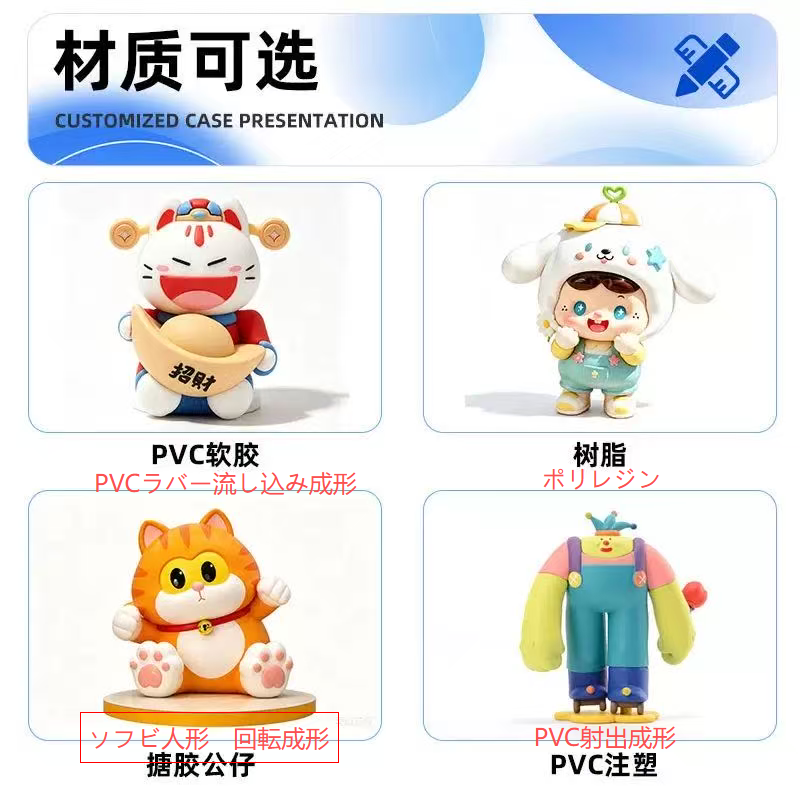
What the materials actually are: soft, hollow, hard
PVC soft vinyl is soft PVC, poured into molds. Thermoplastic. The finished piece has some stretch and bounce, and the surface can be glossy or matte. Rotational vinyl casting uses PVC paste. It’s rotationally molded so the paste coats the mold wall, leaving a hollow, thin shell. Light, squeezable, springs back. Polyresin is two-part PU or epoxy. It cures hard and dense after casting, with a weight closer to ceramic or stone. The molding principles alone push these three toward different shapes. The same sketch will end up with different wall thickness, weight, and drop resistance depending on the material.
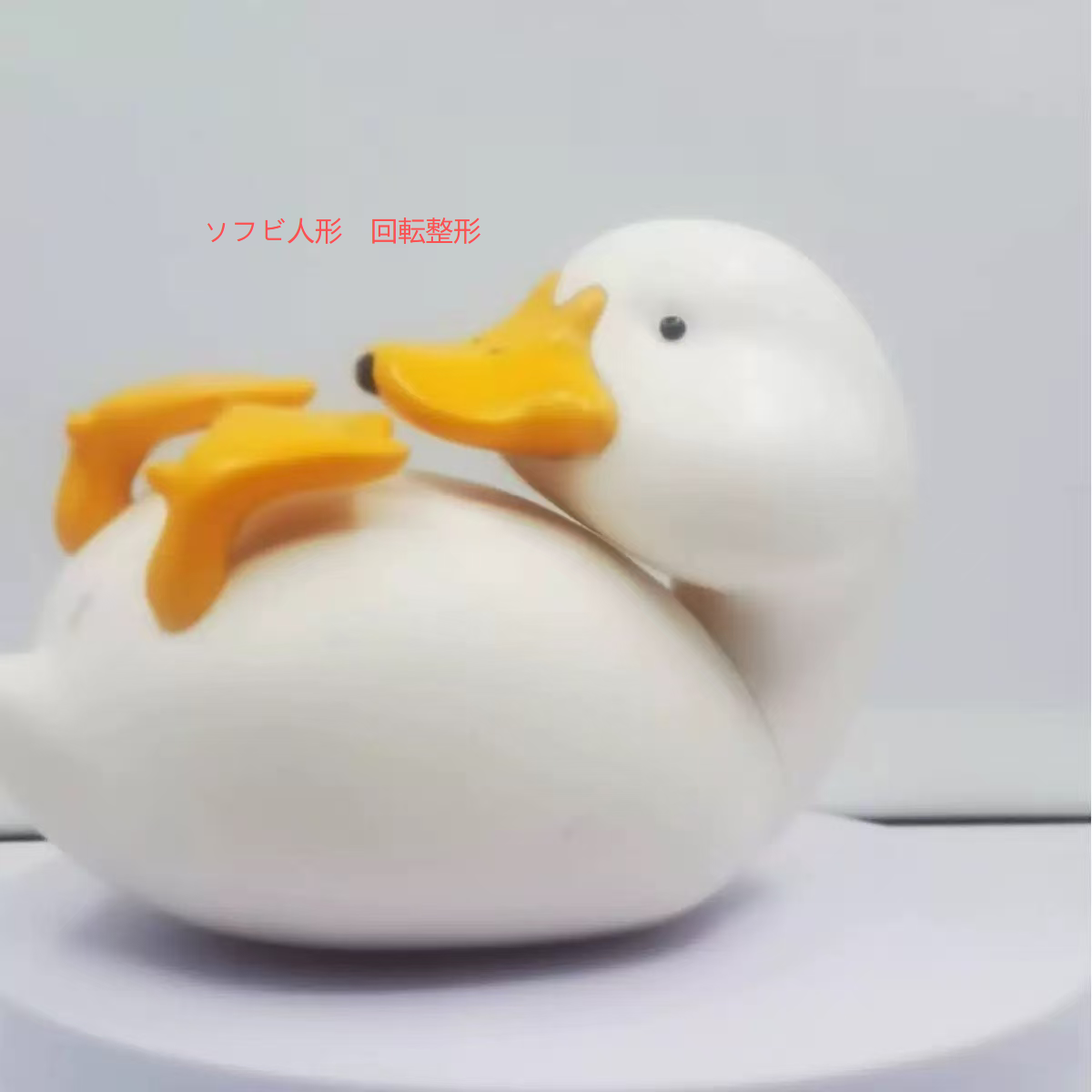
What shapes suit PVC soft vinyl
- Multi-color blocking: color-separated pouring and edge-wrapping are mature processes. You can layer multiple colors in one piece with clean boundaries between them.
- Fine detail and 3D charms: 3D charms, keychains, blind-box mini figures. Soft material holds finer textures and reliefs.
- Transparent or translucent effects: clear material can do jelly or amber looks. That’s something only PVC soft vinyl pulls off well. Rotational vinyl casting and polyresin can’t really match it.
- Soft touch and safety: flexible, no sharp edges. Good for kids’ products and anything handled often.
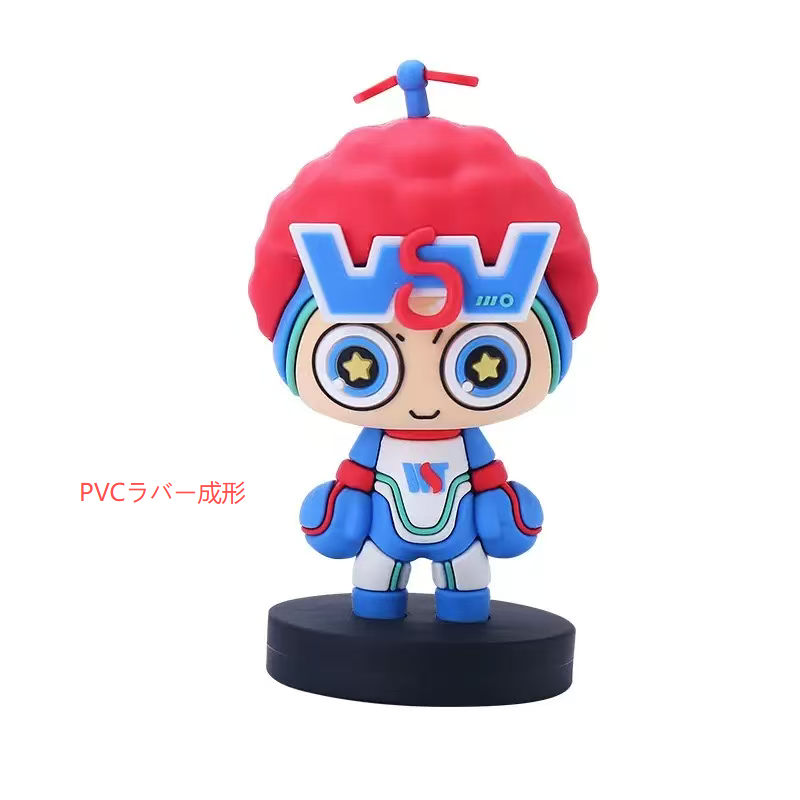
What shapes suit rotational vinyl casting
Rotational vinyl casting’s biggest strengths are size and cost. The hollow structure keeps large dolls light. Same volume uses far less material than a solid piece. Works for dolls and display pieces from a dozen centimeters up to several dozen. The surface is on the matte side and takes large-area paint well. Mid-size blind-box figures and squeezable chibi characters usually go this route. It also suits characters that need overall painting, since big paint areas spread the unit cost thinner. Weak spots: not great for clear material or tiny sharp corners, and detail precision trails polyresin.

What shapes suit polyresin
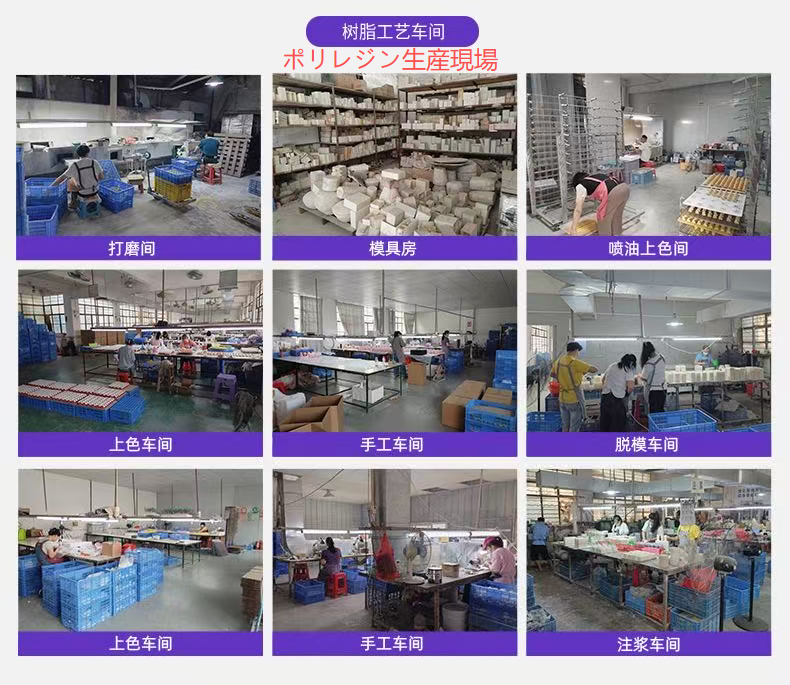
Polyresin is the precision route. Once cured it’s hard enough to hold sharp edges, clothing folds, hair strands, that kind of fine structure. Small parts don’t warp easily. Good for figures, statues, and high-detail static collectibles. The trade-off is brittleness. Thin, pointed areas break under stress. Unit cost and weight are both higher than the other two. Better for small runs and display pieces, not for kids to play with.
Three questions before choosing:
- Does the shape need to be soft or hard?
- How big is it, and can it be hollow?
- Is the precision and feel worth the cost?
Answer those three and the material basically picks itself.
Beyond shape, three more things to check
- Quantity: polyresin tooling and hand-painting cost a lot. Fine for a few hundred pieces or fewer. PVC soft vinyl and rotational vinyl casting molds can be reused long-term, so they’re more economical for volume.
- Durability expectations: if it needs to survive drops and squeezing, go PVC soft vinyl or rotational vinyl casting. If it’s static display and can handle brittleness, then consider polyresin.
- Cost structure: polyresin has the highest unit price, rotational vinyl casting the lowest. If the shape allows it, rotational vinyl casting is usually the first choice for budget control.
Mixing all three materials within one IP is common too: PVC soft vinyl for charms in volume, rotational vinyl casting for large dolls to keep costs down, polyresin for limited collectibles to add premium. That covers both low and high price SKUs at once. But feel and color consistency across the series need to be confirmed at the sampling stage, or the whole line ends up feeling mismatched.
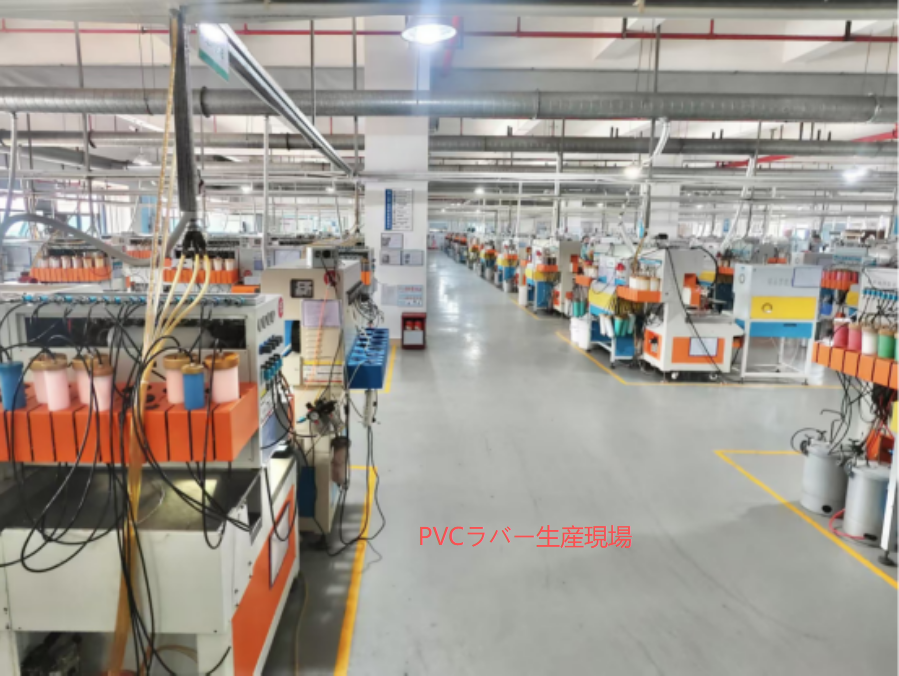
Dongguan Yongtai Craft Gifts Co., Ltd. runs four production lines: PVC soft vinyl, PVC injection molding, silicone products, and plush toys. Clients often come with the same sketch asking which material to use. Yongtai’s approach is to look at the shape and size first, then factor in quantity, cost, and feel expectations before making a recommendation. When needed, they sample both solid and hollow versions for a side-by-side feel comparison. Yongtai needs the shape requirements and budget clear before material selection means anything. Rather than picking a material first and redesigning around it, let the shape dictate the material.
Post time: Oct-13-2026